Friday, 5 October 2018

Perspectives - Post-modernism in Kill Bill (2003)


Quentin Tarantino is considered a post-modern auteur in film, he uses many techniques to convey this during his work. Kill Bill is iconic across the world, critically acclaimed and massively popular. To understand how Tarantino is post-modern it is important to first know how post-modernism portrays itself in society and in the art of what we create. Modernism was the idea of consciously trying to discover new varieties of viewing the world. For Example, questioning why things are done a certain way and trying to improve them as in architecture, during the modern period, it was considered modern to build a house which didn't look like a house. Modern art strives to question and criticise what art really is resulting in  unique and interesting variations of what their creators call art. 


Figure 1 - Traditional house design

Figure 2 - modern house design


Tarantino used Non-Linear Narrative in a way to challenge traditional story telling where it starts at the beginning, goes to the middle and then ends with the end. instead he constantly jumps back and forth to make sure the audience remains guessing throughout, the benefit of a non-linear narrative is that he can tell the story in a way which gives the audience knowledge exactly when they need it from any period of time in the chronology of the story.        


Tarantino pays homage to various other film legends and techniques as mentioned by Groth on Tarantino as an Auteur "Tarantino regurgitates his favourite clichés and formulas, sometimes with a wink, sometimes with a straight face, sometimes with wit, but always with an unconditional love for the clichés" (Groth, 1995) originally influenced by Grindhouse Cinema, jumping from Japanese anime, to samurai to mariachi bands, references to Jet Li, and capitalism and various metaphors surrounding that, Howard remarks "consider it from a postmodernist perspective, you have to consider the anxieties that come with globalisation" (Howard, 2017) for example in the scene Lucy Liu decapitates the mob bosses head at her function for remarking on a change in tradition, a symbol of silencing opposition from those who disapprove.

Figure 3 - Kill Bill [film] - Lucy Lui 

The use of violence as an art form or as a celebration breaks tradition in the sense it is very graphic and is arguably avant garde practice because it pushes the boundaries of what the audience is expecting and used to, Tarantino is consciously trying to shock the audience which would be considered post-modern, resulting in something unpleasant for the audience, this is no more prominent than in the Japanese restaurant fight scene where people have blood spraying from their limbs like jet streams, blood covering every surface and blade penetrations clearly visible for the audience to observe.    

Figure 4 - Kill Bill [film] - Fight Scene

Tarantino uses an entirely new mode of media included in the film too in the form of Japanese anime cartoons to inspire a kinship to graphic novels pushing the boundaries of film to post-modernism by suggesting film doesn't necessarily have to contain only one form of media. This technique also helps because it allows for an extremely graphic scene which couldn't be shot in live action because of its extreme violence and subject of paedophilia. An audience will find the experience of the drawn cartoon duller and less discomforting in this form instead of live action because it is harder to associate with.    

Figure 5 - Kill Bill [film] - Anime Sequence

Considering the director had complete control over every aspect of the film down to a say in costume and choreography, it becomes extremely apparent as why Tarantino chose to make miniatures and film live action over a better looking animated scene during the fly over in the aircraft over Japan. It is arguable this choice was made because animation would have been the more traditional option in the current technological climate, so by breaking this tradition Tarantino gives the audience something unexpected by confronting a version of how the world is viewed.    

Figure 5 - Kill Bill [film] - live action fly over

Bibliography:

Howard, A. (2017). Tarantino as A Post Modern Auteur (Pulp Fiction, 1994, Kill Bill Vol.1 2003). [online] Alexandra Furssedonn Howard. Available at: https://alexandrafurssedonn.com/2017/04/20/tarantino-as-a-post-modern-auteur-pulp-fiction-1994-kill-bill-vol-1-2003/ [Accessed 5 Oct. 2018].

Groth, G. (1995). A Dream of Perfect Reception. [online] The Baffler. Available at: https://thebaffler.com/salvos/a-dream-of-perfect-reception [Accessed 5 Oct. 2018].

Illustration:

Figure 2: Foulkes, J. (2018). Stock photo BP2252. [online] Bananapancake.com. Available at: https://www.bananapancake.com/-/galleries/personal-favourites/-/medias/28eebd52-5410-4b57-9ce2-7eceae12aa4e-bp2252 [Accessed 5 Oct. 2018].

Figure 1: Khederian, R. (2018). Restoring a historic house: 8 tips and tricks before getting started. [online] Curbed. Available at: https://www.curbed.com/2017/6/8/15762608/old-house-renovate-restore-tips [Accessed 5 Oct. 2018].

Figure 3, 4 and 5: Kill Bill. (2003). [film] Directed by Q. Tarantino. A Band Apart: Miramax.

Toolkit 2: Weight lifting poses

Five poses in stepped frames depicting extreme poses and in-betweens for weight lifting animation. 


Tuesday, 2 October 2018

Character Design - Caricature

I began the day by drawing weaponry, armour and furniture from the period of ancient Rome focusing on versatility, ornateness and decoration in order to gain a little understanding of the time period and the item properties.   

I then took an item at random and began to exaggerate it using different archetype shapes to give the helmet personality, the larger pen images evolved from triangles and an attempt to create the helmet of a more brutal Legate of the Roman Military.    
Afterwards we were tasked with Caricaturing either a human or an animal, the original image and my first drawing are next to each other below, then on the right is some examples submitted to aid me in pulling out the exaggeration in the face using various archetypes. 

 Below are my attempts to draw out exaggeration using various archetype shapes.


Friday, 28 September 2018

Film Review - Django: Unchained (2012) - The Heroes Journey

The Heroes Journey is a formula of movie theory in order to create a film centring around the idea of telling a story through the journey of a main character on an adventure or quest.

The Theory came about firstly from Joseph Campbell, he wrote down the formula to what he believed made a movie addressing 'The Heroes Journey'. Below is his model of the formula and its various adapting branches. The Diagram moves anti-clockwise beginning at 'call to adventure', each tick in the model defines a new event marker which is generally required to make the formula work, however that being said, it is possible to chop and change the order, this can lead to experimentation with the message and direction of the film through the theory of montage.
 

Figure 1 - Joseph Campbell - Theory of The Heroes Journey Model 1949

The Theory can definitely be applied to the film Django: Unchained directed by Quentin Tarantino.

Figure 2 - Django: Unchained - Movie Poster - Quentin Tarantino 

It begins at the beginning of the formula and analyse each event marker as it appears in the film in chronological order I have included a number in brackets next to the heading to identify where in the formula it naturally sits. 

1) Ordinary World (1)
To the main character of Django the ordinary world consists of his life as a slave in 1858, all he knows is his struggle against the white man which own him, and the savagery of which they treat him. This fits here because of Djangos' naivety to anything further than this reality.

2) Super natural Aid (4) 
Supernatural aid comes very early on for Django when he is released from bondage by Dr King Schultz, a bounty hunter. He is the supernatural aid because he appears as if an angel would appear, out of nowhere acting like a biblical miracle to raise him from his current place in the world. 

3) Crossing the First Threshold (5)
This appears quite unorthodox because it is usually the beginning of the next series of event markers in a heroes journey story, however it appears before two other event markers in the separation phase of the formula. Django is a slave up until this point, his freedom is his first barrier to success, he is considered property until this point allowing him no rights, Schultz paying for his freedom means he can cross over into the initiation stage of the journey. 

4) Call to Adventure (2)
This happens in the same scene as the first threshold but happens chronologically afterwards. Schultz propositions a partnership with Django to which he accepts. 

(5) Refusal of the Call (3)
Django is a character balled up with righteous anger towards slavery, but isn't without emotion, the refusal comes when he is asked to shoot his first bounty, putting down his rifle is a refusal to take up the way of life which he is about to enter. Until Schultz convinces him its the right thing to do. 

6) Belly of the Whale (6)
Django enters the belly of the whale when he quests to the first plantation searching for the Brittle Brothers, these outlaws have personal connection to Django as they used to torture him and his wife Broomhilda. Djangos vengence comes when he exacts their deaths for the bounty, this brings about a posse from the plantation to the commotion where Schultz produces the bounty for the men. This moment is significant because it is the point Django can turn away from this new path, however he chooses to broker into another deal with Schultz to retrieve and free his wife. 

7) The Road of the Trials (7)
Django spends the winter with Schultz holding up his half of their new bargain to help him bounty hunt over the winter, this consists of a montage cutting together their various bounty nabbings into a Rocky-esque sequence. It is an initiation into the fully fledged adept of bounty hunting and signifies a transition from untrained slave to bounty hunter. 

8) Meeting the Goddess (8)
Broomhilda is first shown to Django when she is removed from the hot box on the Candie Land Plantation for an attempt at running away, but he only meets her for the first time in the scene where she is brought up to Schultz in his room. 

9) Woman as temptress (9)
This marker isnt so much a woman, but a male manservant named Steven played by Samuel Jackson, he becomes wise to their plans and informs Calvin Candie of their deceit towards him, he is the temptress because he has the power to stray the hero from his path. 

10) Ultimate Boon (12)
After a tense moment at the dining table Django and Schultz buy Broomhildas' freedom for $12000, the papers are signed to make it legal, this is the ultimate goal of the hero, this is what he comes for. 

11) Apotheosis (God-like) (11) 
The moment after the ultimate boon is a sequence of god-like violence from Django where he kills a huge amount of the plantation guards completely unscathed, even to the point where it would seem lady luck has given the guards the same shooting ability instilled in storm troopers. Djangos rampage is only brought to an end when Broomhilda is held hostage.

12) Refusal of the return (13)
A broken Django is now once again back in chains being sold off to the Lequint Dickey Mining Company being marched towards his fate by a bunch of Australian slavers. At this point everything seems completely hopeless, Django has lost, the refusal comes when he decided he is going to instead of going quietly back to slavery, he hatches a plan to get free, turn around and save his wife. 

13) Rescue from Without (14)
This occurs in the same scene as the refusal, Django is rescued from slavery by the slavers because they agree to cut him in on $500 of the bounty Django proposes to them for the gang he pretends is at the Candie Land Plantation, they give him a gun which gives Django the advantage to kill them. 

14) Magic Flight (15) and 15) The crossing of the return threshold (16)
The Magic flight is the montage of Django traversing the landscape at high speed of which he travels with the slaver party towards the Candie Land Plantation, this happens during Calvin Candies funeral, he stops at the place where they caught the run away fighter to kill the occupants of the shack, they signify the gateway back into the Candie Land environment/threshold.

15) Atonement with the Father (10)
Schultz was the only father figure to Django. His atonement comes when he is found on the barn, Django comes and talks to his corpse to metaphorically suggest he is here to see a job finished and that Schultz would not die in vein.  

16) Master Of Two Worlds
Djangos final success comes after he outwits the occupants of the Candie Land manor household, kills the plantation guards and Steven the temptress manservant, he finally blows up the house with dynamite bringing an end to the Candie rein, he is the master of the two worlds because he broke free of his world of slavery and became a free man, then again beat the new world which contained the rich white overlords, there is no one else left to stand in his way.

17) Freedom To Live (17)
Django and Broomhilda ride off into the night on horseback with the Candie Land manor house wreckage behind them. This suggests they are off to begin a new life together, the world their oyster. 

Illustrations:

Figure 1 - Joseph Campbell - Theory of The Heroes Journey Model 1949
Figure 2 - Django: Unchained - Movie Poster - Quentin Tarantino 
              

Toolkit 2: Dramatic Poses

Below are a series of dramatic poses using the MOOM character:

1) Sitting on bench


2) Holding the door open


3) Swinging


4) Standing


5) Crouching


Wednesday, 26 September 2018

Film Review - Star Wars: The Empire Strikes Back (1980) - The Heroes Journey

The Star Wars Trilogy was originally releases beginning the year 1977 as the films Star Wars: A New Hope directed by George Lucas then Star Wars: The Empire Strikes Back directed by Irvin Kershner,was released in 1980 then Star Wars: The Return of the Jedi in 1983 directed by Richard Marquand. The trilogy was re-shot in 1997 as part of the Star Wars 20th anniversary to which audiences found they were watching an altered set of films with various edits and inserted scenes. 

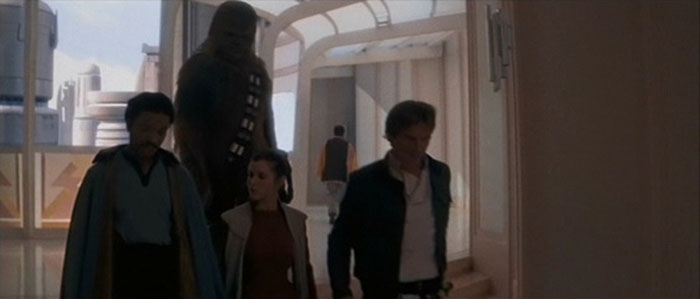
One of the more notable scenes in which altering took place was in the Cloud City on the planet Bespin, in the original film the environment proved to be an overly complicated set up which would have involved multiple matte paintings and limited movement for the actors. In the image below a still from the original film shows the technique used to close off the outside sky city from the view of the camera avoiding the issues of the matte painting.


Below this is a film still of the same instance of the 1980 re-mastered version, CGI had greatly advanced sub-navigating the problems of matte painting logistics and allowing Lucas to truly represent the Cloud City of Bespin. "This opens the city up a great deal, making it more believable as a floating habitat." (Gould, 2004) This does however have a backlash against the working artists of the film towards their professional work, the individuals that worked on the film designing it into a way which can be utilised for the time have their work squandered due to editing. This is something which unfortunately can't be avoided even if it is arguably heartless or destructive to their legacy, the film is a machine which requires updating and progression, the people working on it were employed to fulfil a duty to the film, if the work they do is now outdated and can be improved then the creators owe it to the film to make it all that I can and should be.       


George Lucas as the creator of the series went back and re-worked the films to be firstly in keeping with the technology, and secondly in order to give the existing audience and new audiences the experience of his world which he envisioned. It is arguable that with goals like these the creator should be able to re-envisage his work to re-make it into what they truly wanted it to be. It worked well due to a change in the audience gratification too. Audiences evolve slowly to be come comfortable with more experimental film, hence the rise in gory/graphic films. To emphasis this: The Scene at the beginning of The Empire Strikes Back involving the moment Skywalker is suspended from the ceiling by his feet, in the original the presence of the wampa is only implied, you only see a shadow and hear its call. In the re-master the wampa ominously sits chewing the tattered meat of another victim, the brief fight ensuing between the two characters is altered from this point, in the original the wampa arm falls to the floor, there is a cry of anguish, then Skywalker leaves the cave. In the re-master the wampa is cut back to with its severed arm. This change was made firstly due to changes in audience gratification, then secondly due to advancement in technology, and thirdly in the pursuit of good story telling to dramatise the situation, which is 100% more dramatic than the original.   


It is important to ask ourselves if George Lucas, when making these changes really had the right to make them when he did. The question of who owns Star Wars has two answers, firstly in 2012 when George Lucas sold the company to The Walt Disney Company he legally gave them the rights to 'grounds keep' the business, to sell merchandise and have a say in its personnel. although LucasFilm still operates as it sees fit. A more abstract answer is summed up by Scott Tobias by saying the fans own Star Wars because "Once artists put something out into the world, they no longer control the way it’s interpreted, or how it finds its path into the culture." (Tobias, 2014) meaning that in a mushy way the fans have taken it into their hearts and cherish it for what it is, it then becomes in part property of the public consciousness, or the fandom, the public create their own stories, trivia and theories based around the Star Wars universe which is owned solely by the public. It is debatable that the audience didn't want the changes because of how it alters their perception of the characters, events and environments. 


For Example: The 'Who Shot First?' debate, where in the original film of A New Hope Hans Solo used the element of surprise to get the upper hand on the character Greedo by shooting him before he can react but was edited in the re-mastering so that Greedo pulls a gun and misses a shot allowing Solo the opportunity to shoot him in self-defence. This changes the character of Solo from how he is originally perceived as a gritty, dangerous vigilante into a hero. 

Illustrations:

Figure 1: Star Wars: The Empire Strikes Back. (1980). [film] Directed by I. Kershner. Elstree Studios, Lee International Studios: Lucas Film.
Figure 2: Star Wars: The Empire Strikes Back. (1997). [film] Directed by I. Kershner. Elstree Studios, Lee International Studios: Lucas Film.
Figure 3: Star Wars: The Empire Strikes Back. (1997). [film] Directed by I. Kershner. Elstree Studios, Lee International Studios: Lucas Film.
Figure 4: Star Wars: The Empire Strikes Back. (1997). [film] Directed by I. Kershner. Elstree Studios, Lee International Studios: Lucas Film.       

Bibliography:

Gould, C. (2004). Star Wars: The Changes - Part Two - Articles - DVDActive. [online] Dvdactive.com. Available at: http://www.dvdactive.com/editorial/articles/star-wars-the-changes-part-two.html [Accessed 26 Sep. 2018].

Tobias, S. (2014). Who owns Star Wars?. [online] The Dissolve. Available at: https://thedissolve.com/features/exposition/838-who-owns-star-wars/ [Accessed 26 Sep. 2018].


Tuesday, 25 September 2018

Toolkit 2: MOOM Action Poses

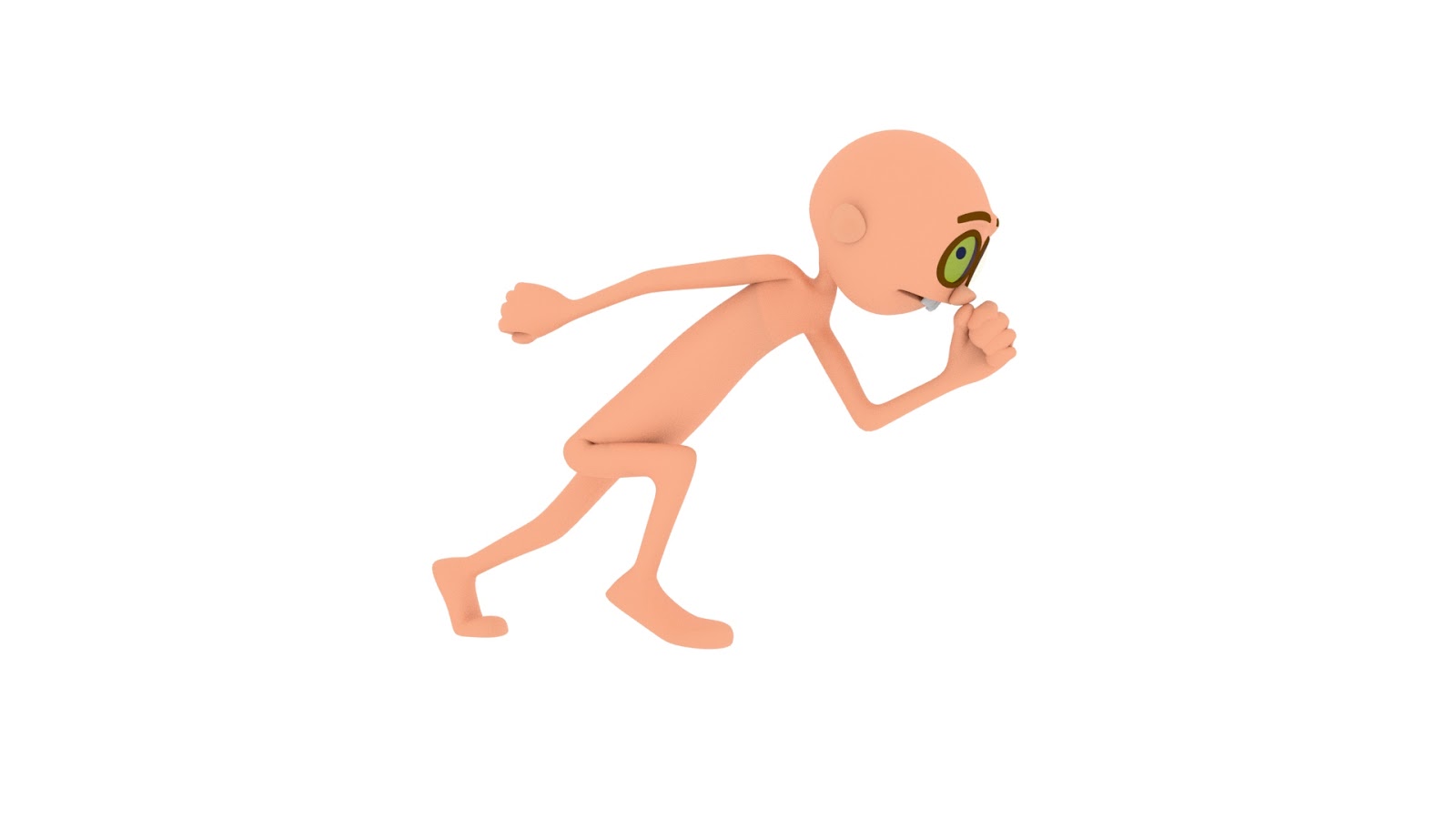
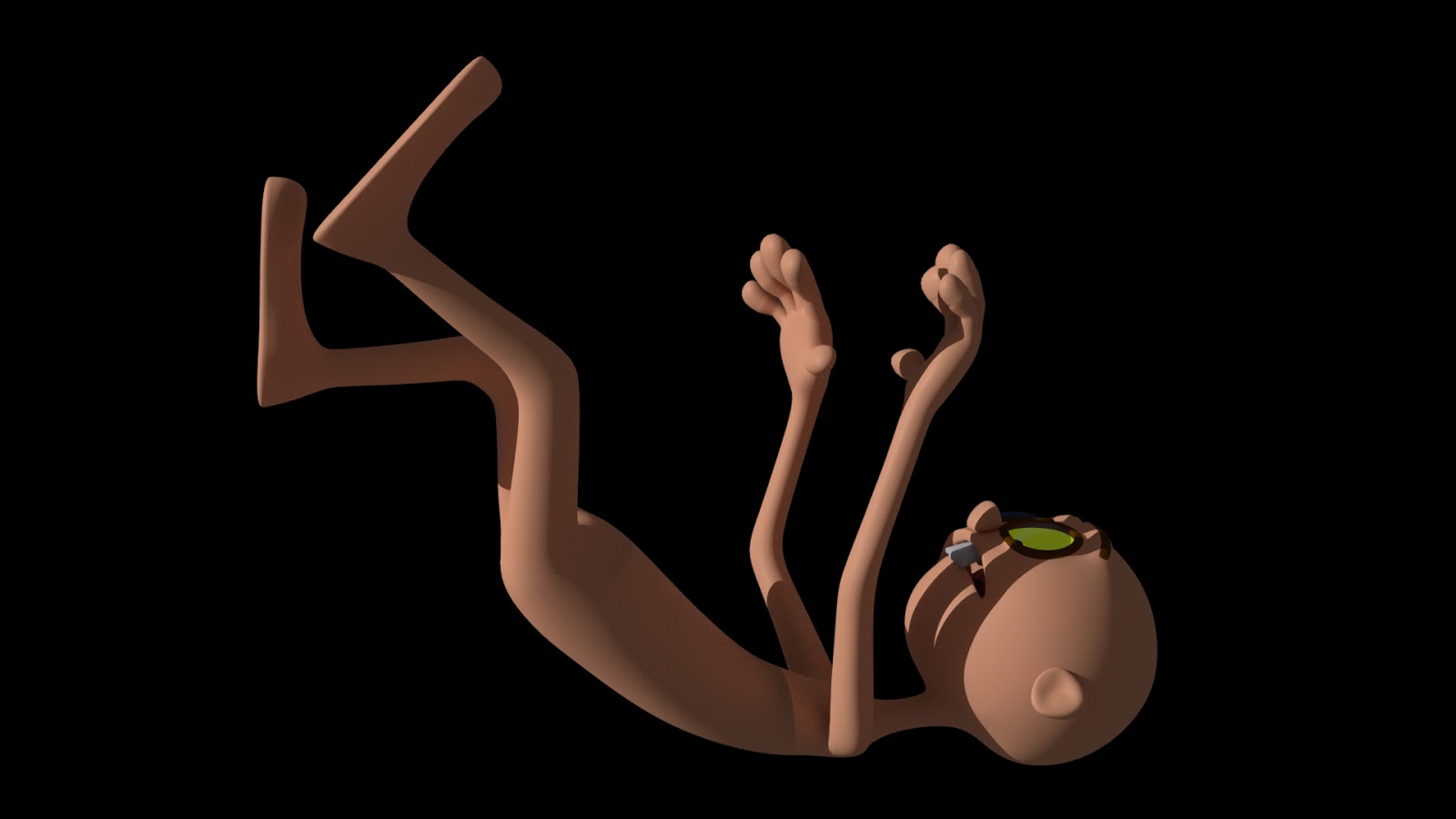
After searching the internet for various action poses from animation or reality I have used the Moom Maya character to recreate the positions in each photo.

1) Mid-sprint


2) Sneaking out

3) Free Falling

4) Sitting

5) Angry elderly Disney character


Year 3 - Major Submission - Reflective statement

This is a reflective statement for my 3rd year of 3D computer Animation Arts.  I shall outline what it was that I achieved this year, I...